
Explore movement as a path of transformation
At Lubarskydos, each practice proposes a way of investigating the body beyond its usual uses. Through different approaches to movement, a space opens up where the experience is not guided by form or technique, but by perception, listening, and the capacity to explore.
The work is developed through somatic practices and improvisation, enabling a more sensitive awareness of the body and expanding its expressive possibilities. There are no models to follow, but rather a supportive approach that allows each person to discover their own way of moving, perceiving, and creating.
The proposals include group sessions, individual processes and spaces for artistic research, and are aimed at both those who are approaching it for the first time and those who are already on a journey in movement, dance or body practice.
Contact Improvisation
Concussion is a dance technique in which points of physical contact provide a starting point for improvisation and movement exploration. It is a form of improvisation in dance and is one of the best-known and most characteristic of postmodern dance.
History
The early roots of Intelligent Communication (IC) can be traced back to the 1972 explorations of a group of dance students led by Steve Paxton. Many of the participants in Paxton's initial group were students at Bennington College and Oberlin College. Today, IC is practiced with a variety of intentions, having expanded far beyond Paxton's initial work. Nevertheless, the foundation of Paxton's original work still forms the basis of almost all, if not all, current forms of IC. For example, IC has been used by artists, performers, and dancers. It has been used in perception training and dance therapy. It has also been a subject of study in university dance courses, graduate theses, and textbooks.
The first dance performance recognized as Contact Improvisation is Magnesium (1972), presented by Paxton and dance students at Oberlin College. Five months after Magnesium, Paxton directed the first series of CI performances at the John Weber Art Gallery in New York City. The dancers performed on mats in the middle of the gallery, surrounded by the paintings on display. The performance was presented as a gallery installation.
The following comment belongs to the university thesis “Moving together, an approach to working in pairs from dance therapy” by Gretchen Spiro.
“Intelligent Circles originated from the movement studies of Steve Paxton, which began in 1972 at Oberlin College in Ohio. There he created a work called Magnesium, considered the seminal exploration of Informative Circles, in which eleven men threw themselves against each other through space. The work ended with the dancers standing motionless for the last five minutes.”
The stillness was a meditation on the physical awareness of balance that Paxton called “the little dance”.
From that initial exploration, Paxton worked with dancers and athletes to expand movement pathways and develop an improvisational dance style based on the physics of bodies in contact and motion. Influences on physical training included postmodern dance, aikido, and gymnastics. The improvisers discovered various ways to lift weight, roll, fall, and hold.
The performances followed one another, showcasing what would be called Contact Improvisation.
In 1973 some members of the original group toured California presenting a series of performances they called "You come and we'll show you what we do."
The group consisted of Steve Paxton, Nancy Stark Smith, Nita Little, and Curt Siddal.
In 1975 the same group formed ReUnion, considered to be the first IC company
The main theme was the exploration of movement possibilities between two people in physical contact. Emphasis was placed on functional movement, trying to avoid the appearance of contemporary dance.
ReUnion briefly considered creating the CONTACT IMPROVISATION brand and developing a curriculum to offer teacher certifications. The group was concerned that people attending CI performances might want to practice and teach without the necessary physical and perceptual training to avoid injury while dancing. Because CI uses falls and acrobatic movements, it requires essential skills and techniques to develop focused physical awareness, strength, flexibility, alertness, and the ability to cooperate with a partner. The ReUnion group wanted to support training and communication among practitioners, not control the practice.
Ultimately, the name was never registered, and to this day there is no certification for CI teachers.
Paxton and his colleagues were interested in developing a non-hierarchical movement practice by promoting continuous innovation and exploration.
The group began publishing a newsletter to promote dialogue among those interested in IC. The newsletter evolved into what is now a biannual journal, Contact Quarterly—A Vehicle for Moving Ideas. Nancy Stark Smith and Lisa Nelson, two important dancers in the development of IC, are still the original editors. They solicit articles and photographs from contributors worldwide. The scope of Contact Quarterly has expanded to include articles in the fields of postmodern dance, new dance, and a variety of body-centered practices.
At the heart of CI is the commitment to follow the point of contact, sharing balance and flights, a deep listening to subtle impulses, and flowing through the waves that cause falling weight and momentum.
Introductory Circle (IC) is currently practiced worldwide. Among the most popular places are Buenos Aires (where jams are held five days a week), Eastern Europe (where there is a growing and enthusiastic interest), and various locations in Europe. Dancers meet at jams, where it is practiced informally, in classes and workshops, at festivals (some with over two hundred participants), and in regular classes at local studios and universities. IC informs postmodern dance, new dance, and dance improvisation. Some practice it as a social activity and enjoy the community connection, some practice it as an art form of dance, and some practice it in performance.
Contact Improvisation (CI), as it's also known, continues to evolve and is developed by many students, teachers, practitioners, and participants around the world. At CI's 35th anniversary celebration, Steve Paxton, Nancy Stark Smith, and Nita Little, who were part of the first group, participated; they continue to perform and teach.
Theory and practice
Contact Improvisation can be practiced in the context of performance or as a social dance.
On a social level, CI gatherings are called jams, where participants can dance or observe, as they choose. The name jam is derived from the jam sessions of jazz musicians, who meet to explore and improvise musical forms and ideas.
The oldest jam session that still operates once a week is in Toronto, Canada, and it started more than thirty years ago.
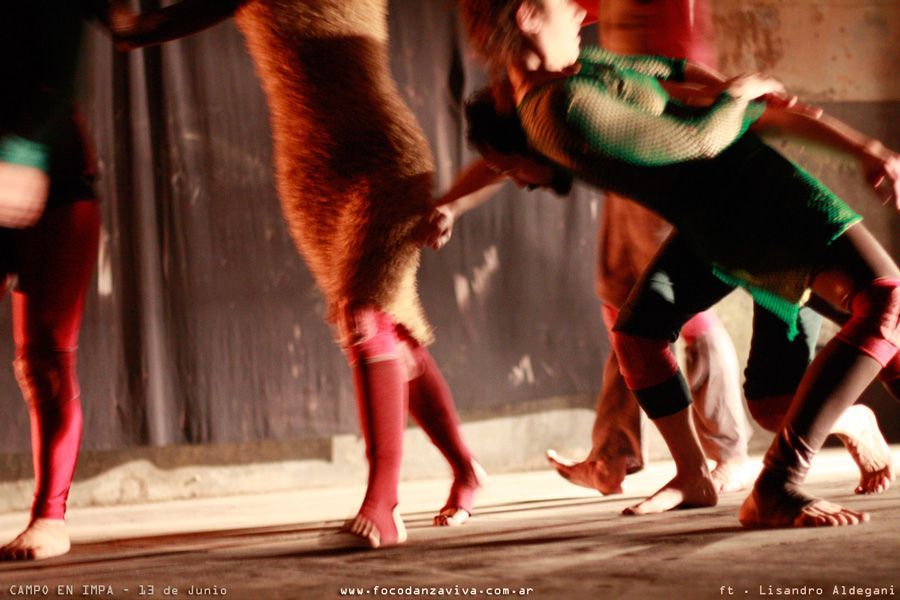
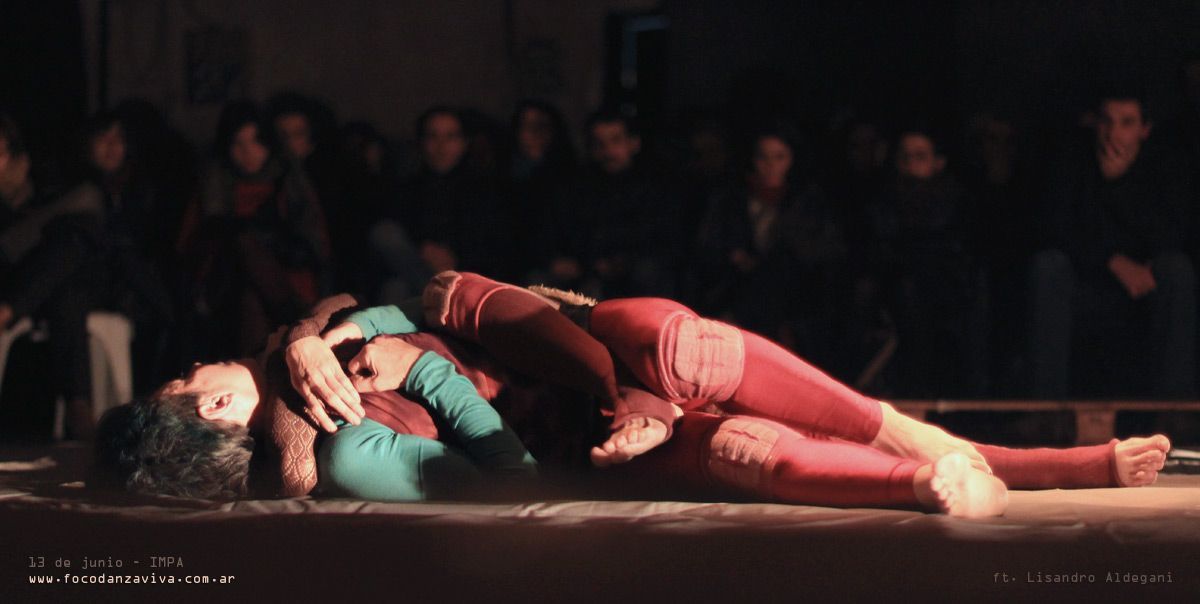
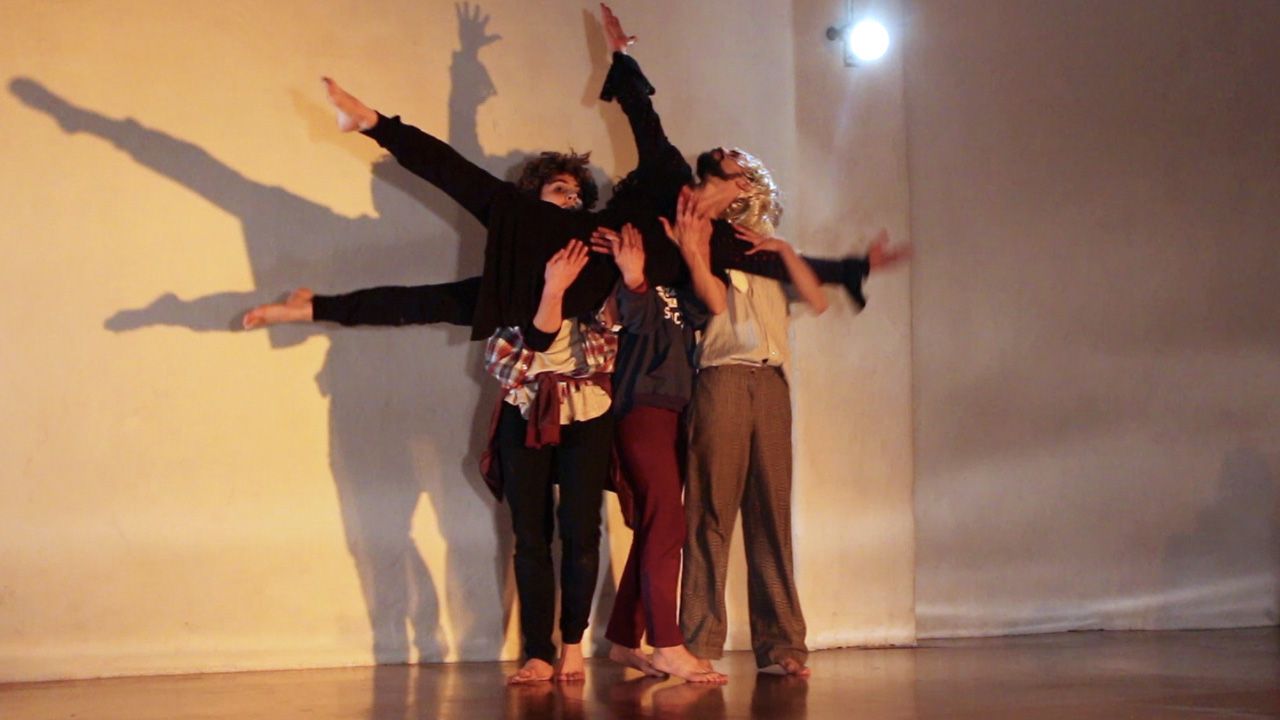
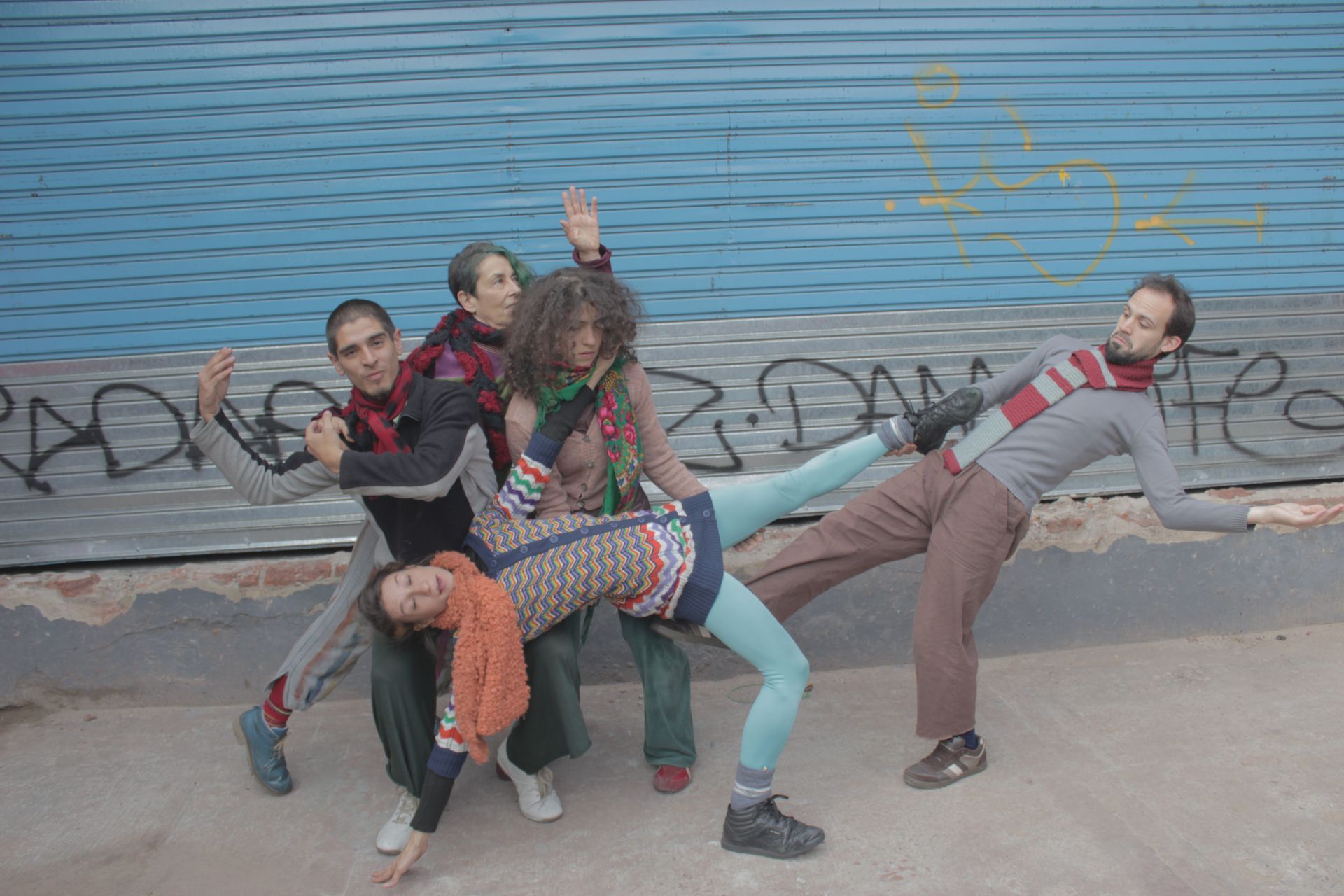
IC is often practiced in duets but can also be done in trios, groups, or solo, using objects (walls, chairs, the floor, etc.) as points of contact. As many teachers say, the floor is our first partner.
The CI technique includes weight transfers, counterweights, rolls, falls, suspensions, flights, and climbs. Practitioners also utilize other disciplines such as the Alexander Technique, acrobatics, Body Mind Centering, the Feldenkrais Method, Eutony, Ideokinesis, gymnastics, Laban movement analysis, Aikido, Capoeira, Tango, Yoga, and Parkour, among others.
Class description by Violeta Lubarsky
Contact Improvisation is a dance form that incorporates the body's weight in relation to gravity, listening, and receptivity to physical stimuli from the environment and other participants. The work with perception involves the senses, especially touch through the skin, exploring the connection between the body's center and periphery, falls, rolls, and disorientation as a present state. It involves entering and exiting the axis, allowing us to fall gently and project ourselves into space, learning to use our own strength efficiently and organically.
At a deeper level, it is a form of dance that promotes presence, being here and now. It is also an experiential exploration of one's own anatomy and resources, a group training where cooperation is part of the learning process, and the development of creative skills is a challenge.
Some words that are part of the class vocabulary:
open, soften, align, follow, guide, receive and deliver weight, attention, intention, centrifugal force, witness, trust, connect, compose, disorientation, spiral, wait, make choices, space, axis, interact, kinesphere, peripheral vision, pause, lever, reflexes, suspend, release, fly, breathe, fold, energize, rejoice, explore, perceive.
Mode
Classes are two or three hours long, beginning with a warm-up followed by exercises that lead into movement. Participants work barefoot, in comfortable clothing, in a group setting.
Body Mind Centering (BMC)
A somatic approach that proposes experiencing the body from within, integrating anatomy, movement, and awareness. It allows for refining body perception, improving movement organization, and generating greater physical and emotional balance.
Authentic Movement
An introspective practice that invites you to move from inner listening, without external structures or guidelines. It facilitates contact with the emotional world, promoting processes of liberation, clarity, and connection with your own essence.
Performance
Spaces for creative exploration where movement becomes an expressive language. Stage presence, authenticity, and the ability to communicate through the body are developed, integrating the personal with the artistic.
01
Conscious movement
02
You don't need any prior experience
03
Space for connection and listening
04
First exploration experience

Contact
Connect with your process
Write to us to learn more about classes, workshops, or to reserve your spot. We're here to support you on this journey.